# Kill Criteria: The Most Useful Page in a Venture Thesis
*Why knowing when to stop can be just as valuable as knowing what to build.*
Every entrepreneur can explain why their idea should succeed.
The market is growing. The problem is significant. The technology is promising. Customers appear interested. The opportunity could be enormous.
But ask a different question:
**What evidence would convince you that this venture is not worth pursuing?**
The answers are often less clear.
This is one of the most important questions we believe an innovation lab should ask before committing significant resources to a new venture.
Because innovation is not simply about discovering what works.
It is also about discovering what does not work, before the cost of finding out becomes unnecessarily expensive.
At Mindshuttle Labs, we think of this as the discipline of defining *kill criteria*.
## The Problem With Falling in Love With an Idea
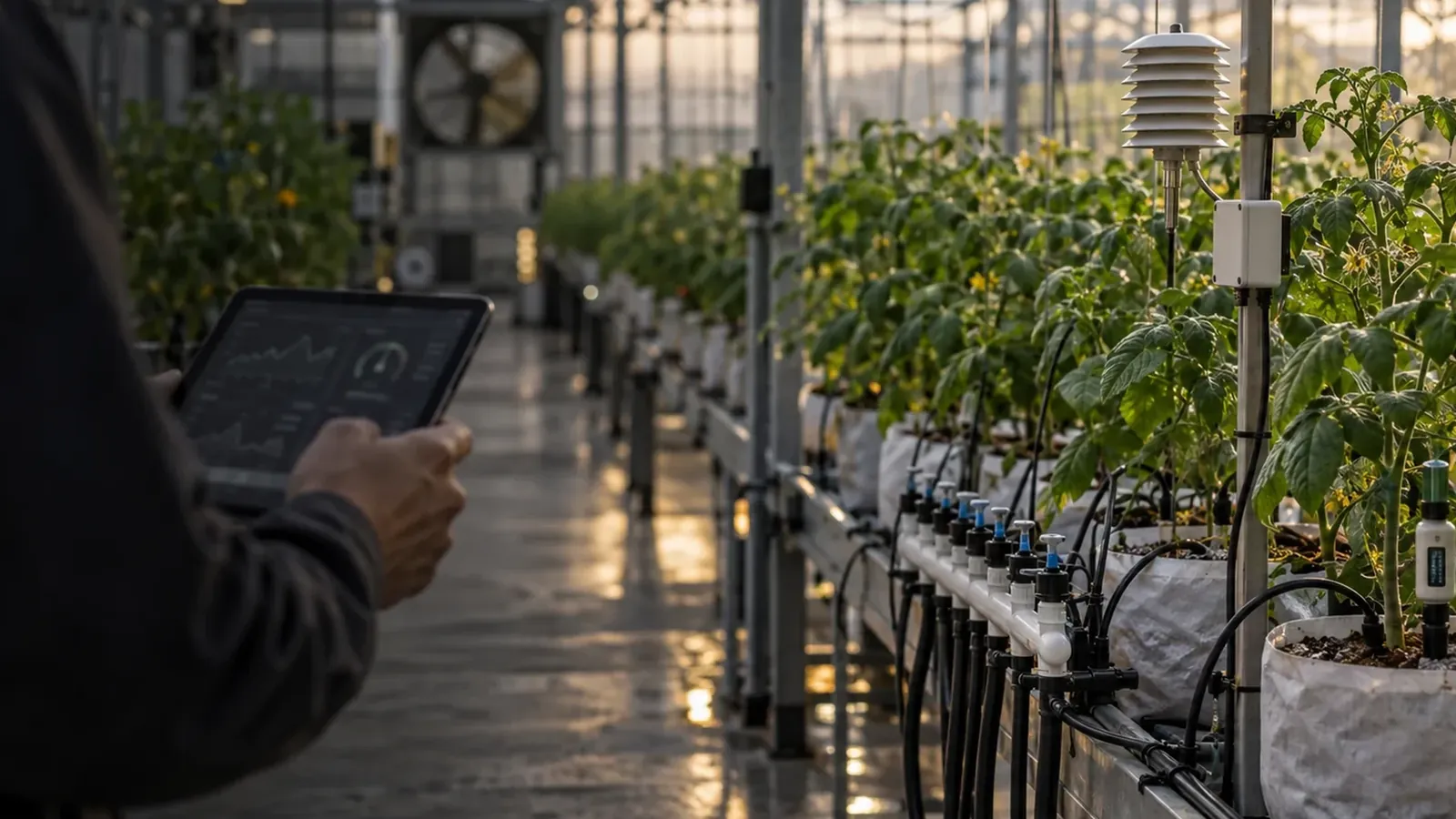
Consider a hypothetical startup developing an intelligent irrigation system for smallholder farmers.
The concept sounds compelling.
Affordable sensors monitor soil moisture. A connected platform analyses environmental conditions. Farmers receive recommendations about when and how much to irrigate.
The potential benefits are attractive: reduced water consumption, healthier crops, better resource allocation and potentially improved yields.
The founding team builds a prototype.
The prototype works.
Sensors transmit data. The application displays readings. Recommendations appear on a farmer's phone.
Everyone is excited.
But an uncomfortable question remains:
**Does a working prototype mean there is a viable business?**
Not necessarily.
Perhaps farmers appreciate the information but are unwilling to pay for it.
Perhaps the hardware requires more maintenance than the business model can support.
Perhaps mobile connectivity is too unreliable.
Perhaps the system's recommendations are no better than the decisions experienced farmers already make.
Or perhaps the product creates measurable value, but reaching customers costs more than the business can sustainably recover.
Any of these discoveries could fundamentally change the investment case.
Yet without predefined decision criteria, the team may keep building.
Another feature.
Another pilot.
Another funding round.
Another six months.
The project continues because everyone can see what it *might* become, rather than evaluating what the evidence says it is becoming.
## A Venture Thesis Is a Collection of Assumptions
Before developing a new product, an innovation team typically starts with a venture thesis.
A venture thesis describes why a particular opportunity might be commercially attractive and worth pursuing.
It may contain assumptions about customer problems, market demand, technology, adoption, competition, delivery economics and revenue generation.
For our agricultural IoT example, the thesis might be:
> Smallholder farmers experience avoidable irrigation inefficiencies. By combining affordable soil sensors with agronomic decision support, we can improve irrigation decisions and create sufficient economic value for farmers to justify a commercially sustainable service.
That is a hypothesis, not an established fact.
It contains several assumptions that must survive contact with reality.
Do farmers experience the problem frequently enough?
Can the system produce sufficiently reliable recommendations?
Will farmers change their irrigation practices?
Will those changes produce measurable value?
Are farmers willing and able to pay?
Can the business deliver the solution profitably?
A well-written venture thesis makes these assumptions visible.
A disciplined venture thesis goes further.
It specifies **what evidence would invalidate them**.
## The Kill Criteria Page
Imagine that our venture thesis contains twenty pages.
Market analysis. Customer personas. Competitive landscape. Product architecture. Revenue forecasts. Distribution channels. Operating model.
Then, near the front, we include a single page titled:
**Conditions Under Which We Will Stop, Pivot or Redesign This Venture**
That may be the most useful page in the entire document.
It forces the team to define failure before emotional attachment, sunk costs and optimistic interpretation begin influencing decisions.
For our hypothetical agricultural IoT venture, the page might look like this:
| Critical assumption | Illustrative kill or pivot criterion |
|---|---|
| Farmers recognise a meaningful problem | Fewer than 30% of qualified interviewees independently identify irrigation inefficiency as a significant priority |
| Product creates practical value | A properly controlled pilot shows no meaningful improvement in irrigation decisions or resource efficiency |
| Users will adopt the system | Fewer than 40% of pilot users consistently engage with recommendations after onboarding |
| Technology is sufficiently reliable | Persistent device or connectivity failures prevent dependable service under realistic field conditions |
| Customers will pay | Willingness-to-pay and purchasing tests cannot support a viable commercial model |
| Unit economics can work | No credible route exists to recovering acquisition, hardware, servicing and support costs at sustainable margins |
*These thresholds are illustrative. Actual venture-specific criteria must be defined using customer research, technical requirements, economic modelling and the cost of failure.*
Notice something important.
The criteria do not all demand that the company be abandoned.
Some signal that the current product design is wrong.
Others suggest a different target customer.
Some might indicate that the technology is viable but the commercial model is not.
The purpose is not to create an excuse to quit.
The purpose is to make continuation a decision supported by evidence.
## Kill, Pivot or Persevere?
There are three broad decisions an innovation team may reach after an experiment.
**Persevere:** The evidence supports the core assumptions. Continue development, while testing the next set of risks.
**Pivot:** Some evidence is promising, but an important part of the thesis is invalid. Change the customer segment, business model, technical approach or value proposition.
**Kill:** The evidence undermines the fundamental investment case, and no sufficiently credible alternative justifies continued investment.
These decisions are not interchangeable.
A technology failure might require redesign rather than abandonment.
Weak willingness to pay from individual farmers might reveal an opportunity to serve agricultural cooperatives instead.
But if the system consistently fails to create measurable value even under appropriate testing conditions, further investment becomes difficult to justify.
The challenge is distinguishing an experiment that has failed from a venture whose fundamental assumptions have failed.
## Why Kill Criteria Must Be Written Before the Experiment
Human beings are remarkably good at explaining away disappointing results.
When a pilot fails, we may argue that the sample was too small.
When customers decline to pay, we may assume they simply need more education.
When adoption is weak, we may decide that the interface needs another redesign.
Sometimes those explanations are correct.
But they can also become mechanisms for avoiding difficult decisions.
Predefined kill criteria introduce discipline.
Before a pilot begins, the team agrees what success would look like, what failure would mean and what evidence would justify another iteration.
The result is not perfect objectivity. Unexpected discoveries can still justify revising a hypothesis.
However, any revision should be explicit, documented and supported by new reasoning—not quietly introduced because the original evidence was disappointing.
This protects the integrity of the experiment.
## Designing Experiments Around the Biggest Risks
A common mistake in product development is testing what is easiest to demonstrate rather than what is most important to learn.
In the agricultural IoT example, demonstrating that a sensor can transmit readings to a dashboard may be relatively straightforward.
It is also insufficient to prove the business case.
The more important uncertainties might be whether farmers trust the recommendations, whether those recommendations improve outcomes and whether the resulting value can support the total cost of delivering the service.
An effective innovation lab prioritises experiments that reduce the most consequential uncertainty.
It might therefore begin with customer interviews and a manually delivered agronomic advisory service before investing in custom hardware.
If farmers will not act on credible recommendations delivered by an expert, adding expensive IoT infrastructure may not solve the underlying problem.
Conversely, if farmers repeatedly act on the recommendations and achieve measurable benefits, the lab has stronger justification for investigating how technology could deliver the service at scale.
**The objective of the earliest experiment is not to make the product impressive. It is to make the investment decision better informed.**
## The Role of Experts in Making Stop Decisions
Domain experts are particularly valuable when interpreting experimental results.
An agronomist may recognise that a poor pilot outcome resulted from unsuitable sensor placement rather than an invalid agricultural principle.
An engineer may establish that a connectivity problem can be solved economically.
A commercial specialist may identify that the intended customer cannot afford the service, but another buyer could capture sufficient value to pay for it.
Without these perspectives, an innovation lab risks abandoning good ideas for the wrong reasons or continuing bad ideas based on incomplete explanations.
This is why kill criteria should be developed collaboratively.
The expert helps identify what would genuinely invalidate the scientific or technical premise.
The product team defines what would undermine usability and adoption.
The commercial team evaluates economic viability.
The venture lead brings these findings together into a clear investment decision.
The outcome should not depend on whoever argues most passionately in the meeting.
It should depend on the strength of the evidence.
## Killing a Project Is Not the Same as Wasting the Investment
Suppose our agricultural IoT experiment eventually fails its commercial viability tests.
The cost of hardware, installation and ongoing maintenance is too high for the intended market.
After exploring credible alternatives, the team decides to discontinue the venture.
Was the investment wasted?
Not necessarily.
The lab may have developed valuable insights into agricultural workflows, low-cost sensing, remote device management, rural connectivity and decision-support systems.
Some of those capabilities may be transferable to other applications.
More importantly, the lab has avoided committing significantly greater resources to a proposition whose economics do not work.
A disciplined decision to stop can create value by preserving capital, time and talent for stronger opportunities.
This is one reason the distinction between a traditional project delivery organisation and an entrepreneurial innovation lab matters.
A delivery organisation is often judged by whether it completes an agreed scope.
An innovation lab should also be judged by **how effectively it discovers which opportunities deserve to exist**.
Sometimes the right outcome is a product.
Sometimes it is a pivot.
Sometimes it is a documented decision not to proceed.
## Making Kill Criteria Part of Governance
Kill criteria should not exist only as a paragraph in a business plan.
They should influence how the venture is funded and governed.
Instead of committing the entire development budget at once, the lab can release investment in stages.
An initial allocation funds problem discovery.
A second allocation supports technical and commercial experiments.
Further funding becomes available when agreed evidence thresholds are met.
At each decision gate, the team reviews the assumptions, findings, limitations and remaining uncertainties.
The question is not simply, "What have we completed?"
It is:
**"What have we learned that justifies the next investment?"**
This approach encourages responsible experimentation without demanding certainty where certainty is impossible.
It also gives stakeholders greater visibility into why resources are being committed.
## The Discipline to Stop Is Part of the Courage to Innovate
Entrepreneurship is often associated with persistence.
Founders are encouraged to believe in their vision, overcome obstacles and refuse to give up.
Persistence matters.
But persistence without learning can become expensive stubbornness.
The strongest innovators are not necessarily those who remain committed to every original assumption.
They are those who remain committed to solving meaningful problems while being willing to challenge their preferred solutions.
A venture thesis should therefore contain two complementary arguments.
The first explains why the opportunity deserves investment.
The second explains what evidence would cause us to withdraw that investment.
Both are necessary.
One establishes ambition.
The other establishes discipline.
## The Mindshuttle Labs Perspective
At Mindshuttle Labs, we see innovation as a process of converting uncertainty into evidence.
We bring together domain expertise, research, experimentation, engineering, product thinking and commercial evaluation to investigate opportunities before determining how they should be developed.
A prototype helps establish what is technically possible.
A pilot helps reveal what works in the real world.
A venture thesis helps explain why the opportunity may create value.
And kill criteria help determine whether the evidence continues to justify investment.
We believe every serious venture thesis should answer one question before the first major development commitment is made:
**What would we need to discover to decide that we should not build this?**
If the answer is unclear, the venture may not yet be ready for significant investment.
Because the objective of an entrepreneurial lab is not to keep every idea alive.
**It is to give the best ideas the evidence, resources and opportunity they deserve—and to recognise when the others should stop.**
---
*Inside the Lab — Mindshuttle Labs*
*This article uses a hypothetical agricultural IoT venture to illustrate experimental governance and investment decision-making. It does not describe the results of an actual Mindshuttle Labs pilot.*
**Mindshuttle Labs | Research. Prototype. Validate. Venture.**